FAQs

Your period suddenly seems unpredictable. A hot flash catches you off guard. You’re waking up at night when you never used to. These can all be signs that your body is beginning the transition toward menopause. [1, 3] 

So, what’s actually changing? It starts with your ovaries. 

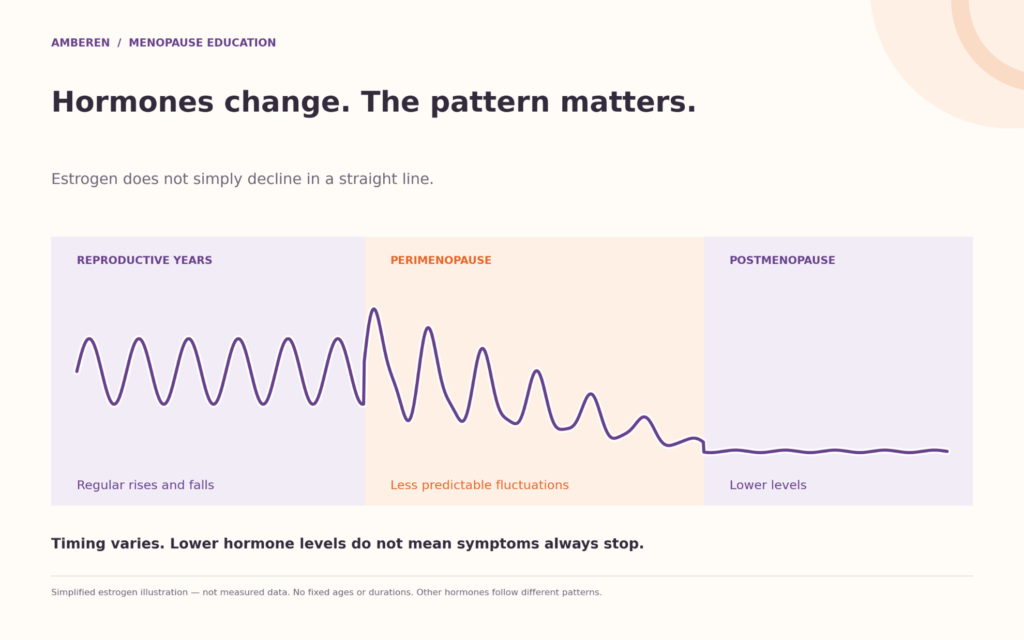
Your ovaries do more than store and release eggs. They also produce hormones, including estrogen and progesterone, that play a role in your menstrual cycle and many other functions throughout your body. [2] 

As you get older, the number of eggs in your ovaries naturally declines, and your ovaries begin to work differently. Estrogen and progesterone levels become less predictable and, over time, generally decline. Your periods may become irregular before eventually stopping, and you also may start experiencing a range of other symptoms, including hot flashes and sleep disruption.   [1–3] 

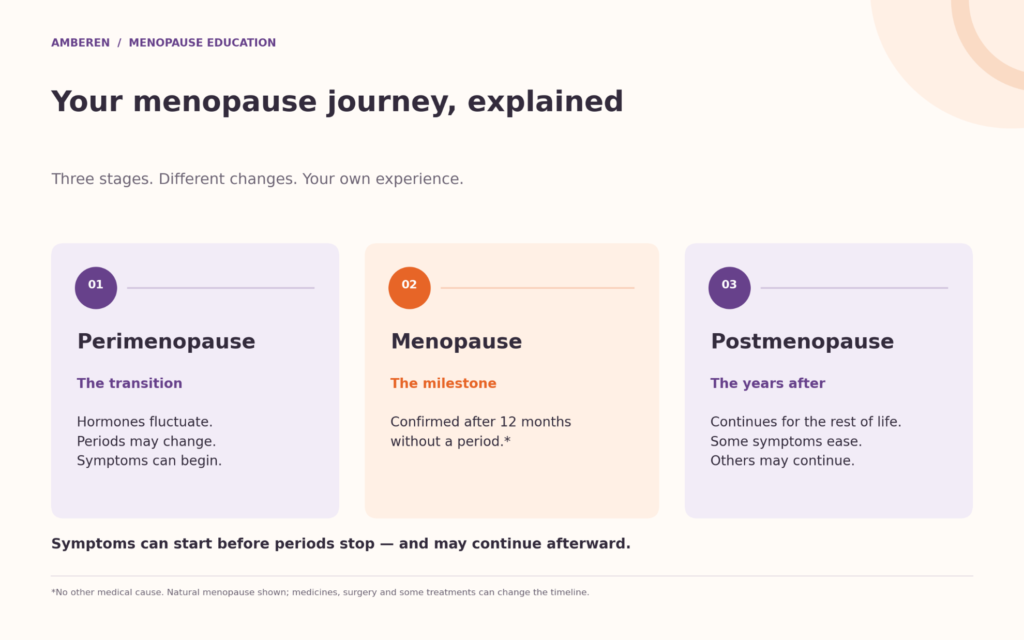
Three terms worth knowing 

Perimenopause means the transition leading up to menopause. During this time, hormone levels can fluctuate, and periods may become less predictable. Symptoms can begin even if you are still having periods. [1, 2] 

Menopause is actually a milestone, not a stage that lasts for years. Medically, you’ve reached menopause when you’ve gone 12 consecutive months without a period and there isn’t another medical reason why your periods have stopped. [1] 

Post menopause is the stage after that milestone.  It begins once you’ve reached menopause and continues for the rest of your life. Some symptoms may ease over time, while others can continue. [2] 

When does menopause usually happen? 

Menopause typically happens between ages 45 and 55, but there’s no single timeline that’s “normal.”  Some women reach menopause earlier, and certain medical treatments can also cause menopause to happen sooner. [1] 

And your periods don’t always tell the full story.  If you use certain types of hormonal birth control or have had a hysterectomy, talk with a healthcare professional about how to understand where you may be in the menopause transition. [1, 5] 

Hot flashes may get the most attention, but menopause can affect so much more, including sleep, mood, concentration, joints…even your bladder. [3] 

Why does a change in reproductive hormones affect so much of your body? 

Hormones are chemical messengers that touch on many functions. Estrogen, for example, does more than just regulate your reproductive system. That’s why menopause symptoms can show up in so many different ways. [2] 

What might you notice? 

Symptoms can include: [3] 

  • Hot flashes: sudden waves of heat, sometimes with sweating. 
  • Night sweats: hot flashes that happen while you sleep. 
  • Changes in sleep: trouble falling asleep or staying asleep. 
  • Brain fog: difficulty focusing or finding the right word. 
  • Mood changes: feeling more irritable, anxious, or low. 
  • Vaginal and bladder changes: dryness, discomfort during sex, or needing to urinate more often. 
  • Joint and muscle aches. 

Some symptoms can also affect each other. Night sweats may interrupt your sleep, and poor sleep can make the next day feel harder and make you less focused. [3] 

Everyone’s experience is different 

You may experience several symptoms, a few, or hardly any. And what you notice today may change over time. There’s no single “right” way to experience menopause [1, 3] 

And you don’t have to wait until your symptoms feel severe or start disrupting your life to bring them up. If you’ve noticed changes or simply have questions, talk with your healthcare professional.

Still getting your period, but suddenly it’s less predictable? Maybe you’re sleeping differently, noticing hot flashes, or finding it harder to concentrate. You may be experiencing perimenopause. [2, 3] 

Perimenopause is the transition leading up to menopause. It often begins in your 40s, although some women notice changes earlier, and it can last several years. [1, 2] 

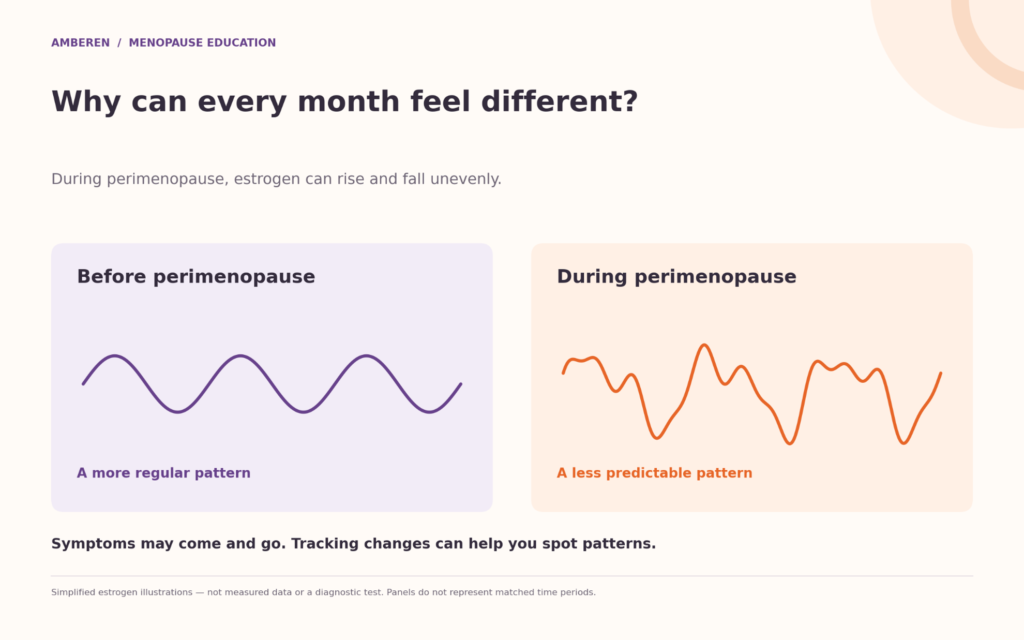
Hormones do not simply slide downward 

One of the tricky things about perimenopause is that hormone levels can rise and fall unevenly rather than simply declining.  That’s one reason symptoms may come and go, or why one month can feel completely different from the next. [2, 4] 

What changes might you notice? 

Your period is often one of the first clues. It may come more or less often, become lighter or heavier, or occasionally skip a month. [3] 

 But periods aren’t the only thing that can change. You might notice hot flashes, night sweats, changes in sleep or mood, or difficulty concentrating. And you don’t need to wait until your periods stop to talk with a healthcare professional about what you’re experiencing. [3] 

Do you need a hormone test? 

Not always. For otherwise healthy women age 45 or older, healthcare professionals can often identify perimenopause from symptoms and changes in periods. Hormone levels fluctuate, so a single blood test may not give a clear answer. [2, 4, 5] 

Testing may be appropriate at younger ages or when there could be another explanation. [5] 

Start with a simple record 

Write down your period dates, symptoms, and how much they bother you. Bring those notes to your appointment, along with a list of any medicines and supplements you take. [2, 7] 

You can still become pregnant during perimenopause. Ask your healthcare professional about contraception if you need it. [2] 

The material provided is for informational purposes only. It is not intended to replace the diagnosis or treatment by a qualified healthcare professional. You should always seek medical advice before consuming any new medicines or supplements.   

When symptoms interrupt your day, knowing where to start can help. Small changes may make you more comfortable and support your health. 

Make room for rest 

Try to keep a regular bedtime and wake-up time. If night sweats wake you, a cooler bedroom and lightweight bedding may help you feel more comfortable. [6] 

Move in ways you enjoy 

Walking, dancing, and strength exercises support your health. Activities that put weight through your bones, along with exercises that build muscle, are especially useful for keeping bones strong. [5, 6] 

Eat for your long-term health 

Aim for a varied, balanced diet. Include calcium-rich foods, such as yogurt, calcium-fortified alternatives, and leafy greens, to support your bones. [6] 

If you are not getting enough of certain nutrients, a dietary supplement may help fill the gap. A healthcare professional can help you decide whether you need one. Meeting your nutrient needs supports overall health, but it is different from relieving menopause symptoms. [7] 

Thinking about a menopause supplement? 

There’s no shortage of supplements marketed for menopause, but the research behind them isn’t all the same. If you’re considering one, take a closer look at what has actually been studied. [8, 9] 

Ask yourself: 

  • Was the actual ingredient or formulation studied in people? 
  • Did the study look at the symptom I want help with? 
  • Is this product appropriate for me, particularly if I take medications or other supplements? 

A healthcare professional can help you work through those questions. [7] 

Notice your own patterns 

If alcohol or caffeine seems to worsen your sleep or symptoms, try cutting back and see whether it helps. Avoid smoking, which can make menopause symptoms worse. [6] 

Address vaginal dryness 

Over-the-counter vaginal moisturizers can help with dryness. Lubricants can reduce friction during sex. Ask a pharmacist or healthcare professional if you are unsure which to choose. [5, 6] 

Get help when you need it 

Healthy habits and self-care may not provide enough relief on their own.  

Ask about options for your specific symptoms. These may include hormone therapy, non–hormonal medicines [3, 5], dietary supplements, or menopause-specific cognitive behavioral therapy—a talking therapy that can help with the impact of hot flashes and related sleep difficulties. [5] 

You do not have to wait until symptoms feel unbearable to ask for support.

Lose your train of thought halfway through a sentence? Struggle to find a familiar word? Feel more irritable than usual? 

If any of that sounds familiar, you’re not alone. Changes in thinking, concentration, and mood can happen during the menopause transition. [3] 

What does brain fog feel like? 

“Brain fog” is an everyday term for changes such as forgetfulness, trouble concentrating, or difficulty finding words. These changes are common during perimenopause and often improve after menopause. [3] 

What about your mood? 

Maybe you feel more anxious than you used to. Or more tearful, irritable, or easily frustrated. Hormonal changes may play a role, and disrupted sleep can make an already difficult day feel even harder. [1, 3] 

These changes are worth talking about, especially if they’re affecting your work, relationships, or everyday life. [3] 

Put your experience into words 

Before your appointment, jot down a few specific examples: [3] 

  • “I keep losing my place during meetings.” 
  • “I wake up several times a night.” 
  • “I feel anxious more days than I used to.” 

You can start the conversation with: “I haven’t been feeling like myself. Could perimenopause be contributing?” 

Menopause may be part of the explanation, but new or worsening symptoms should not automatically be put down to hormones. [3, 5] 

Most importantly, don’t feel as though you have to figure it out on your own. If something doesn’t feel right, bring it up. Your concerns are worth taking seriously.

Sources